
CR Sanjiu Academic Portal
Overview
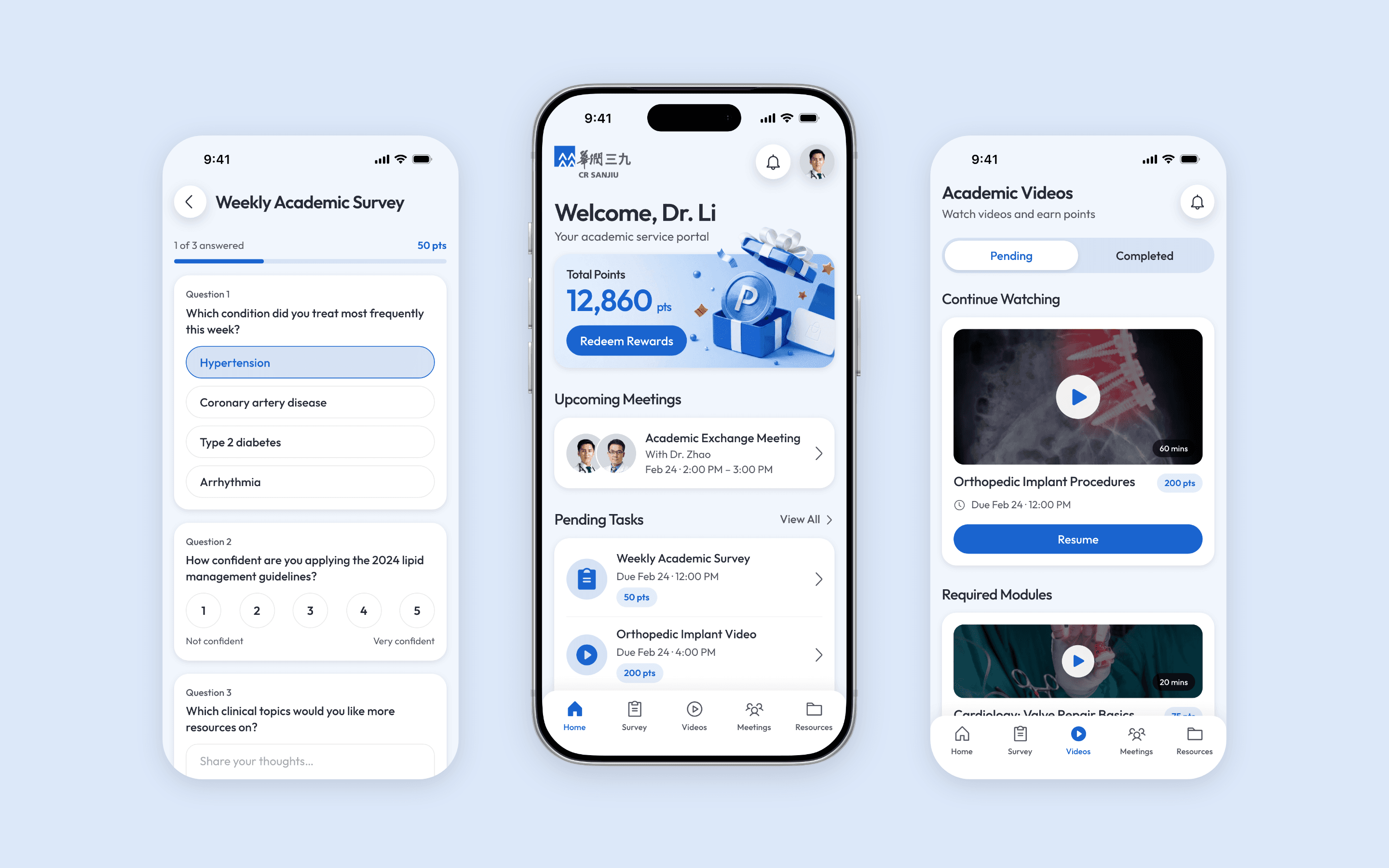
CR Sanjiu is one of China's largest pharmaceutical companies, and its business runs on relationships with the doctors who prescribe and stock its products. The Academic Portal is a rewards app that puts that relationship on new terms: doctors earn points through professional activity, surveys, academic videos, meetings, shared resources, then spend them on the company's own products.
I worked on this project at Capgemini in a three-designer team, owning research, the reward system, and UI. The shipped app is in Chinese; the screens shown here are faithful English recreations for clarity.
Role
Product & Service Designer
Responsibilities
User research, usability testing, reward system design, flows, UI
Tools
Figma
Timeline
Jun to Jul 2024
The Problem
How does a pharma brand stay connected with doctors when traditional incentives are no longer allowed?
Doctors were already doing the work CR Sanjiu asked of them: completing surveys, watching academic videos, and attending meetings. The company gained value from every interaction: market insights from surveys and stronger engagement through educational content. But the experience was scattered across four partner platforms, each with its own login.
Meanwhile, doctor relationships still relied on an older model: branded gifts handed out by sales teams. When stricter compliance rules banned gifting, that channel disappeared overnight. CR Sanjiu had lost its traditional way of showing appreciation, leaving one opportunity to rebuild that relationship: make doctors' existing engagement more valuable.
Where It Started
2018 · The Doctor's Journey
WeChat Account
the official account, one menu deep
Survey Tool
its surveys, run on third-party forms
Video Site
its lectures, on an external player
Conference App
its meetings, signed in on a partner app
Branded Gift, Hand-Delivered
from sales visits, unrelated to the work
CR Sanjiu's channels since 2018: four logins, and nothing to show for the work.
2024 · The Same Journey in One App

Survey Complete
Thanks for sharing your input

Earn, balance, and redeem sit one tap apart. One login, one balance, and the work finally has something to show.
The Brief
One app where doctors earn, track, and redeem points through a reward program, allowing CR Sanjiu to strengthen doctor relationships without relying on gifts or giveaways.
User Research
Before drawing screens, I spent time in three hospitals, watching how a doctor's day actually unfolds and where a rewards program would either fit or get deleted.
The Evidence: 40 Surveys, 8 Interviews
What Doctors Said
The Design Answer
78%
Have under 5 free minutes between patients
71%
Could not say what their engagement had earned them
65%
Read pharma content as promotional by default
62%
Were juggling 3 or more separate pharma platforms
“I have four minutes between patients. Nothing is designed for that.”
“When a rep hands me something, I owe him. I would rather owe no one.”
“Show me a technique I can use on Monday. That is worth my evening.”
The Reward System
The design work started before any screen: earning had to feel professional, the balance had to feel real, and redemption had to feel like shopping instead of paperwork.
The Strategy Loop
Nothing is given.
Everything is earned.
and the loop restarts
Nothing is given. Everything is earned.
Once a product arrives at the hospital, the next survey is suddenly worth three minutes.
Backstage
Points land after real engagement
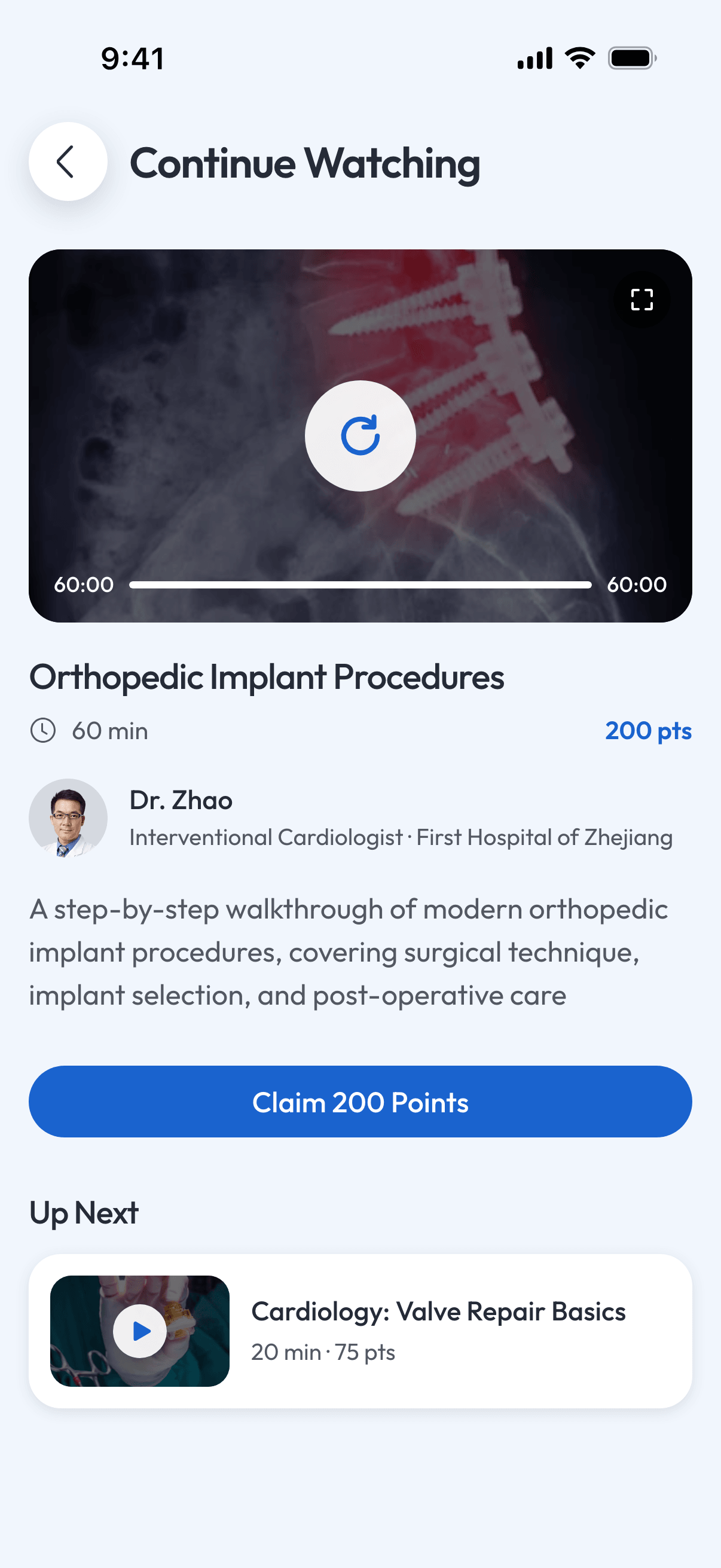
A video pays only once watch time clears its threshold. A survey pays on submission, not on opening.
Not all doctors earn alike
The same survey pays by physician level and specialty tag, tuned at headquarters.
The screens were only the front stage. Behind them, headquarters created campaigns, the same sales teams that once handed out gifts decided doctor by doctor how many points each could earn, and every budget, deadline, and reclamation rule had to work together. Designing that operational system was as much the job as designing the interface.
The Reward Catalog
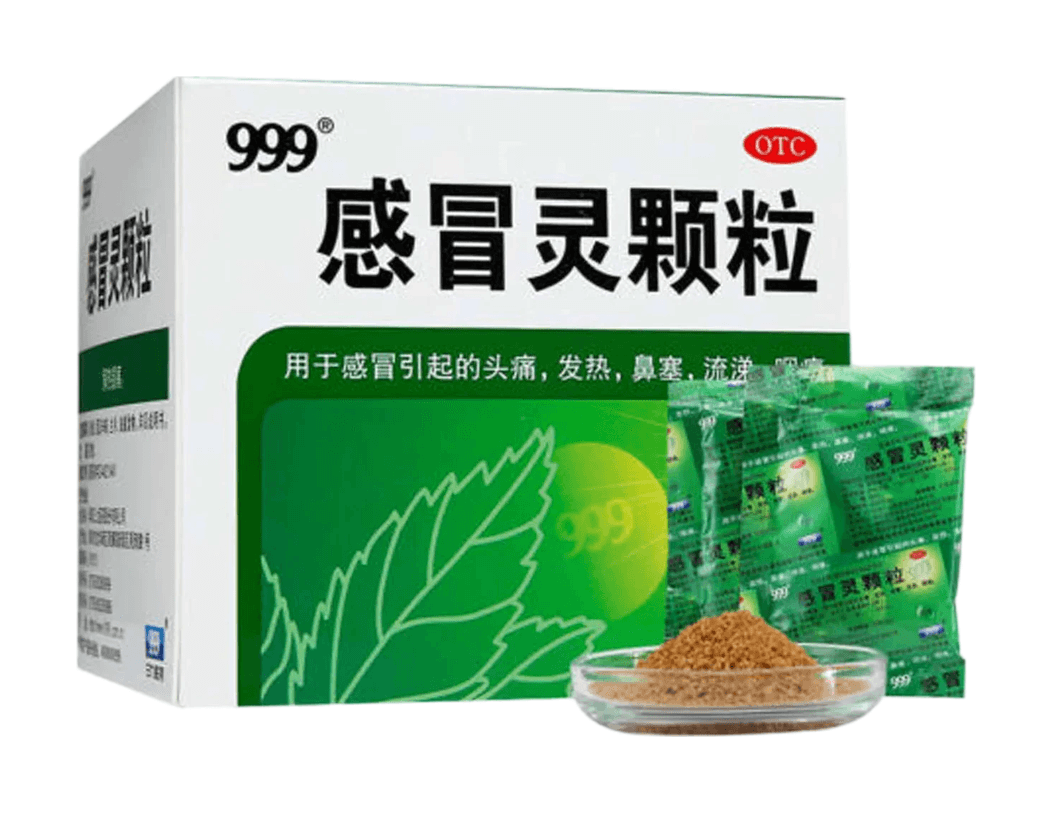
Ganmaoling
600 ptsWeek One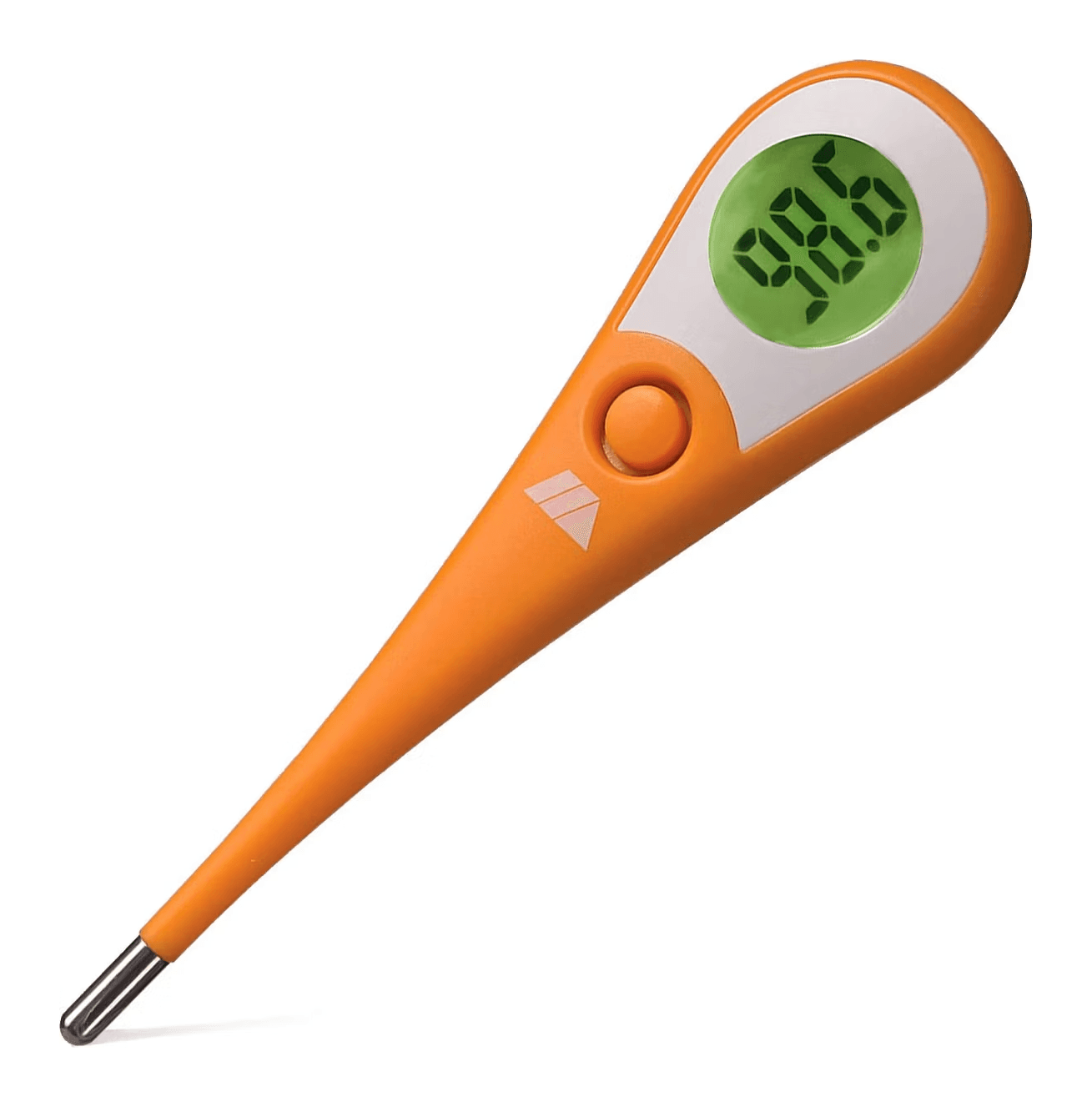
Digital Thermometer
1,200 pts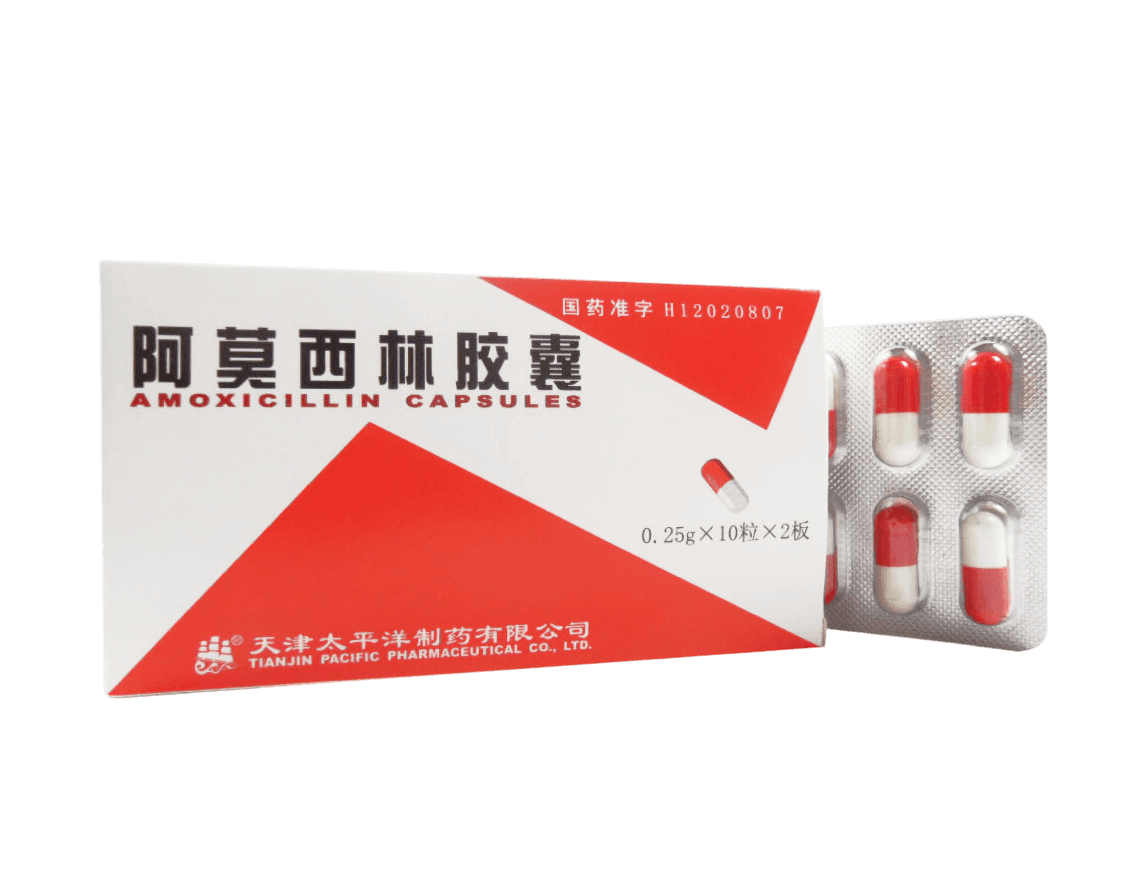
Amoxicillin Capsules
1,500 pts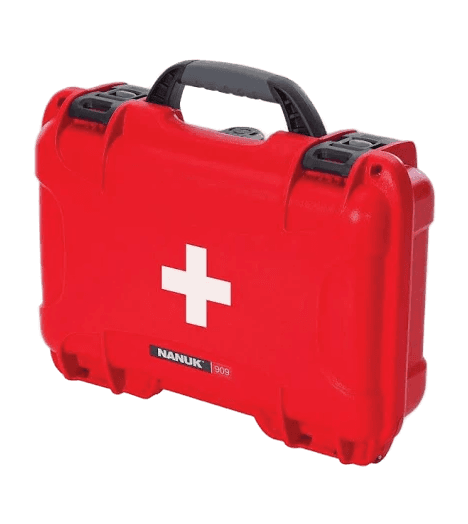
First Aid Kit
1,880 pts
Stethoscope
2,200 pts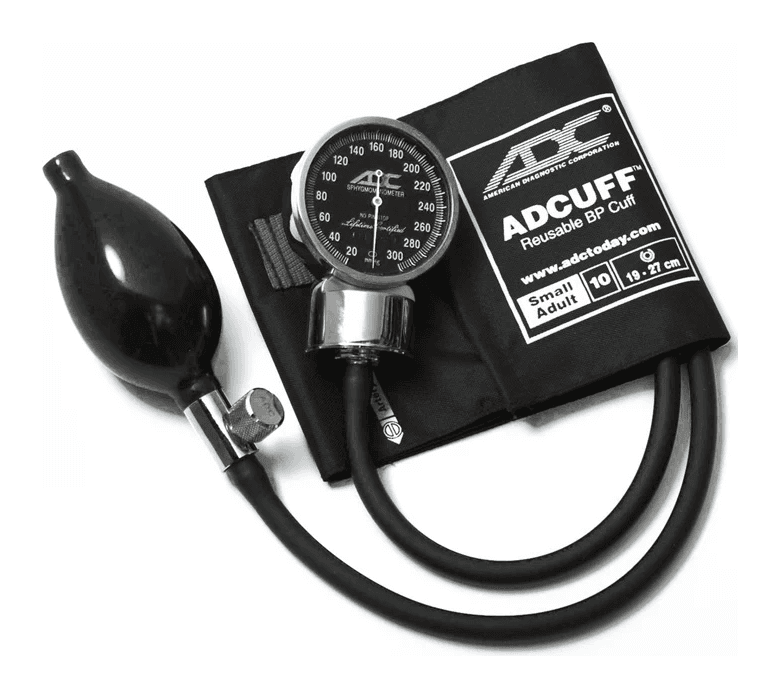
Blood Pressure Monitor
2,500 ptsThe Season GoalGanmaoling
600 ptsWeek OneDigital Thermometer
1,200 ptsAmoxicillin Capsules
1,500 ptsFirst Aid Kit
1,880 ptsStethoscope
2,200 ptsBlood Pressure Monitor
2,500 ptsThe Season GoalThese six are a sample of a much larger catalog, but the range is the point. The first reward costs about a week of consistent activity, so doctors can redeem something while the habit is still forming. The higher tiers give them a reason to keep coming back.
The Business Payoff
The rewards are the client's own product line, not trinkets. Redemption is not gifting by another name: doctors earn the points and choose the products, and every order is a sale CR Sanjiu never had to push.
Lo-fi to Hi-fi
Our first wireframes carried over the old platforms' assumptions. A first round of usability testing exposed four of them; after the fixes, a second round measured the difference. All four were the same mistake in different clothes: our system knew the value but never showed it.
The Usability Rounds
01
Say what a task would earn
02
Compare two reward costs
03
Complete a redemption
04
View newly earned points
The four fixes below are what moved the numbers.
The Four Fixes
01
The tasks show their points
The wireframes listed tasks the way the old platforms did: a title and a due date. 8 of 10 doctors could not say what completing one would earn, so they skipped the list.
Home
Total Points
12,860 pts
Meetings
Academic Exchange Meeting
Feb 24 · 2:00 PM
Tasks
Weekly Academic Survey
Due Feb 24
Orthopedic Implant Video
Due Feb 24
Departmental Wellness Survey
Due Feb 28
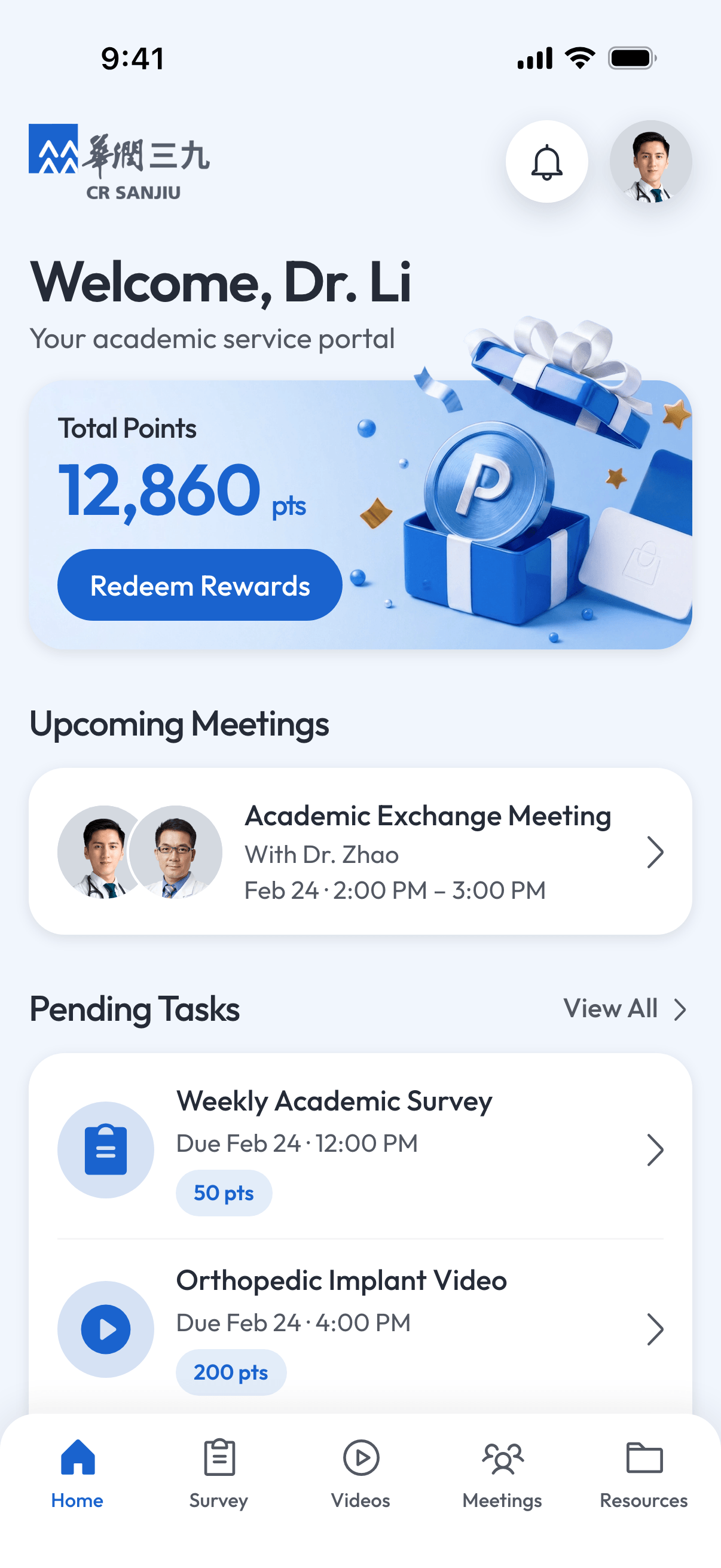
No points on the tasks
Points on every task
02
Costs move onto the cards
The first store used the classic list-to-detail pattern, cost revealed one tap deep. Doctors compared costs from memory, then gave up.
Rewards
Ganmaoling
Digital Thermometer
Amoxicillin Capsules
First Aid Kit
Stethoscope
Blood Pressure Monitor
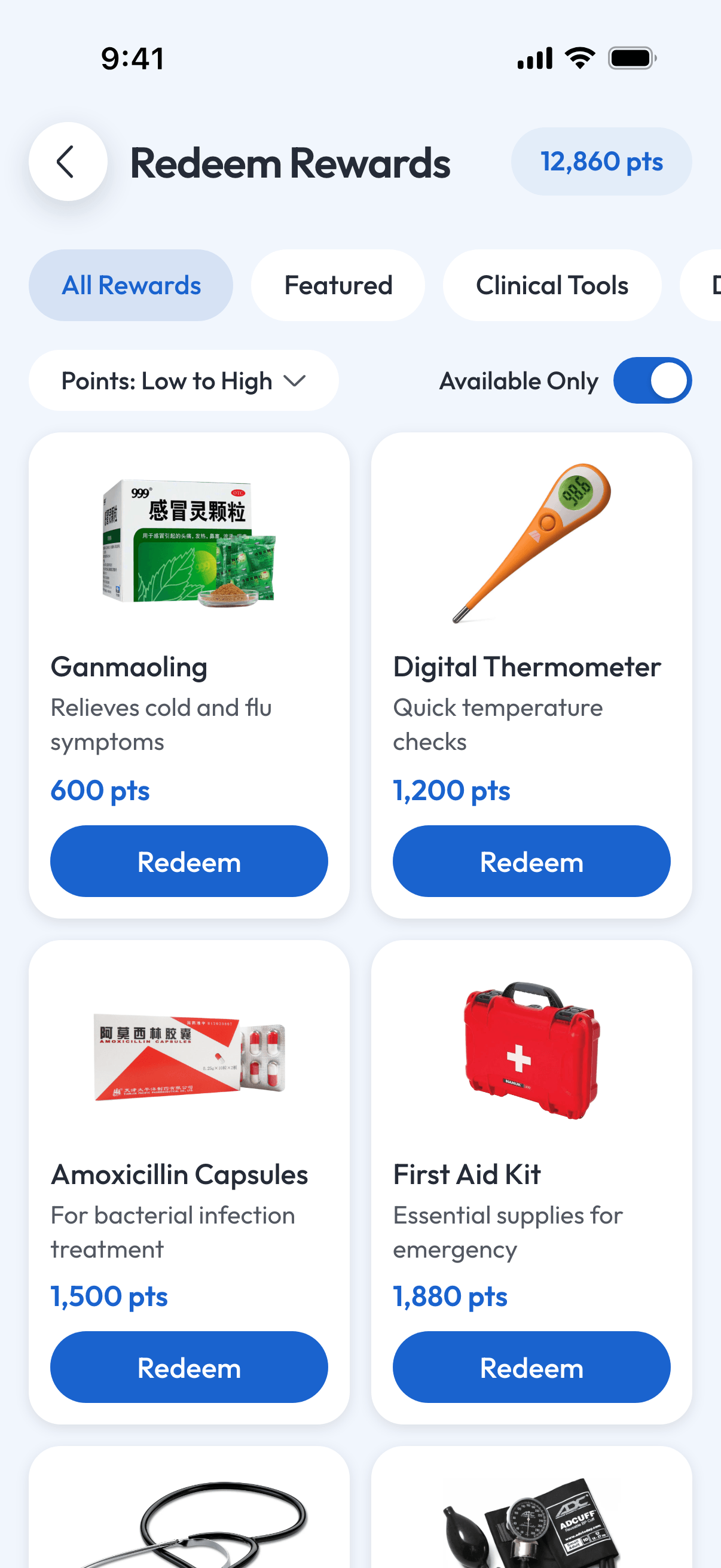
A list with no costs in sight
Cost on every card
03
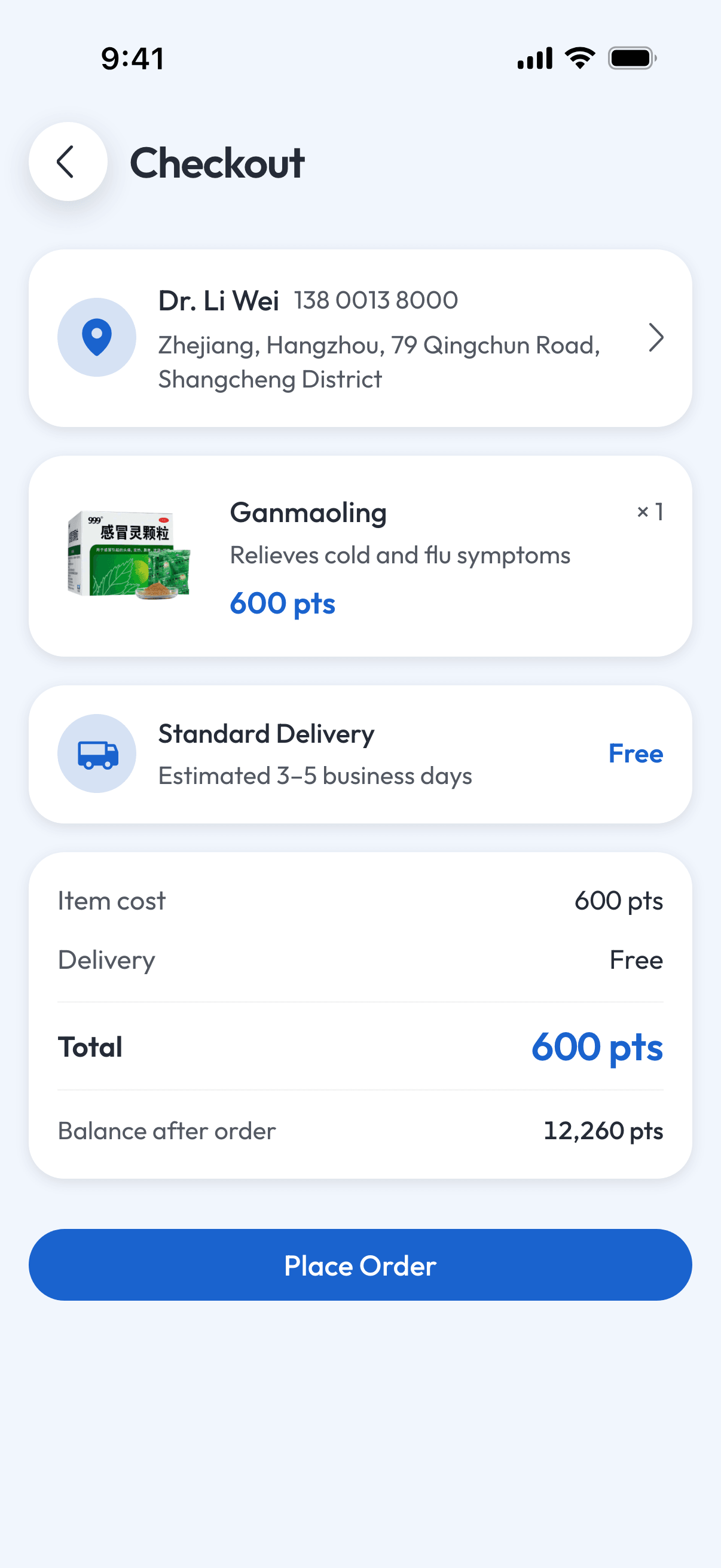
The dialog becomes a checkout
Redemption was a standard confirmation dialog. Testing exposed the gap within minutes: doctors asked where it ships, who covers delivery, where the receipt is. The dialog answered none of it.
Rewards
Ganmaoling
Digital Thermometer
Amoxicillin Capsules
First Aid Kit
Stethoscope
Blood Pressure Monitor
Redeem Ganmaoling?
This will use 600 of your points
Two buttons and no answers
Address, delivery, receipt
04
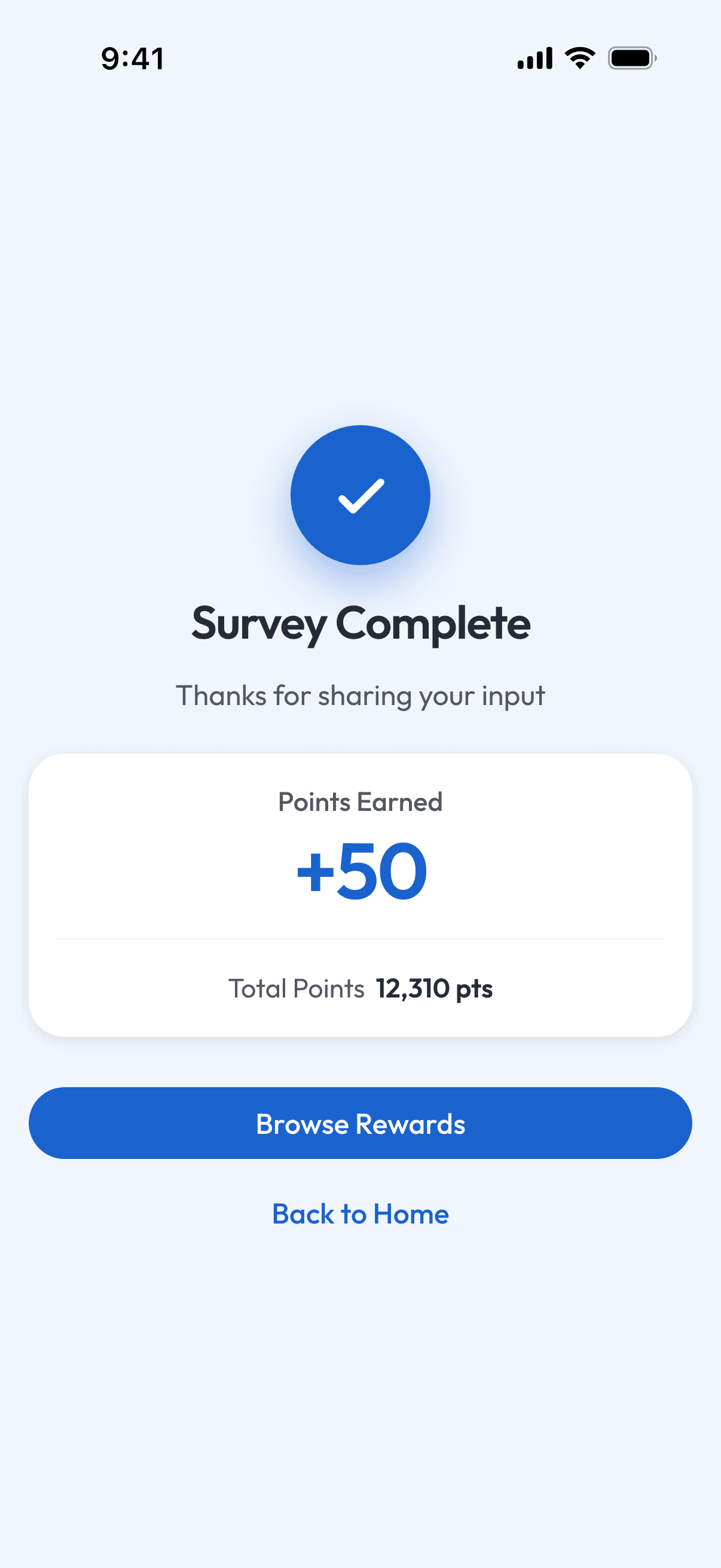
Earning gets its own screen
Earning ended with a toast, the default pattern in most apps. Nobody noticed it, so finishing a task felt like nothing happened. The reward has to land somewhere.
Weekly Academic Survey
How often do patients ask you about OTC cold relief?
Daily
A few times a week
A few times a month
Rarely
A toast, gone in two seconds
Points land, new total in view
The Final Product
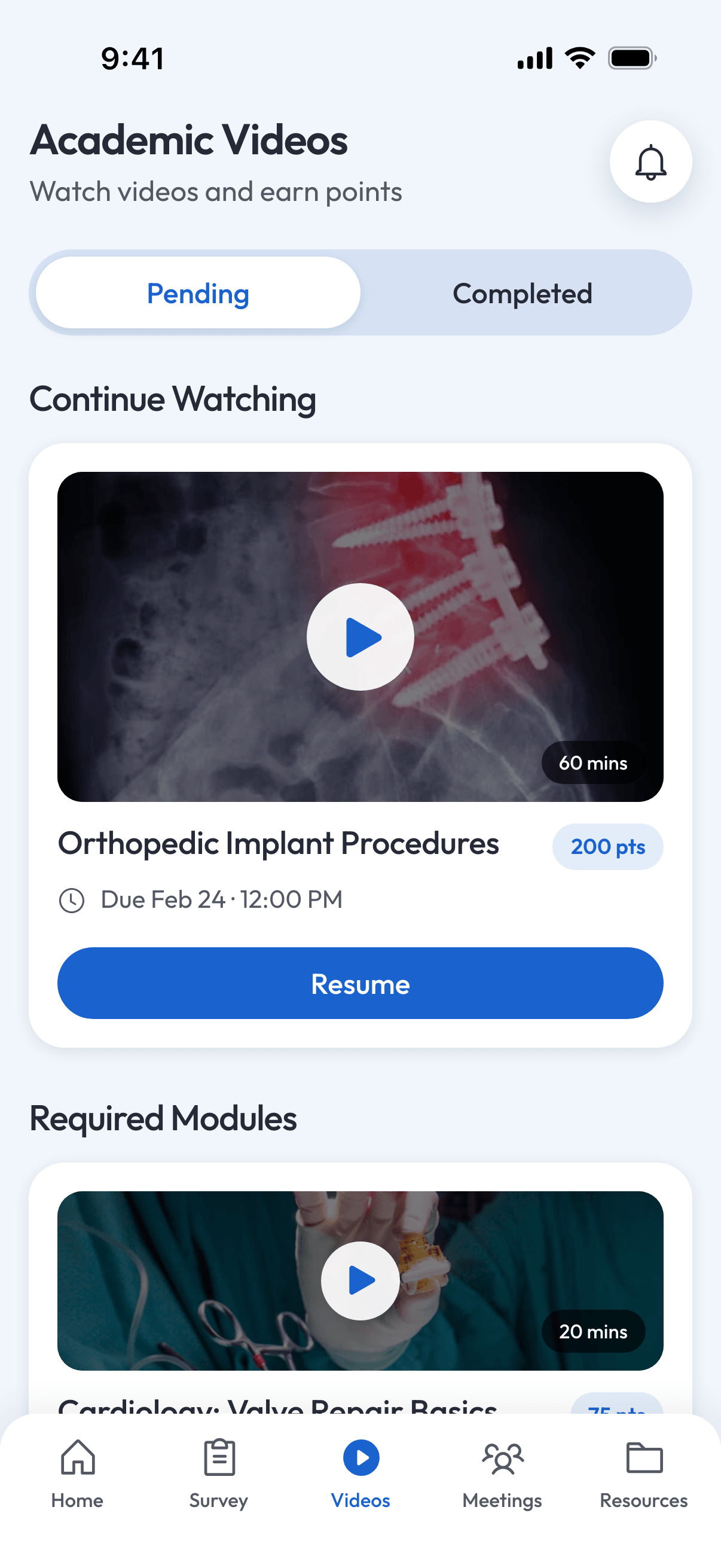
The shipped loop, screen by screen: four ways to earn, each worth its own points, and a redemption that behaves like a store.
Answer a Survey
Watch an Academic Video
The module library
Finish the video to claim its points
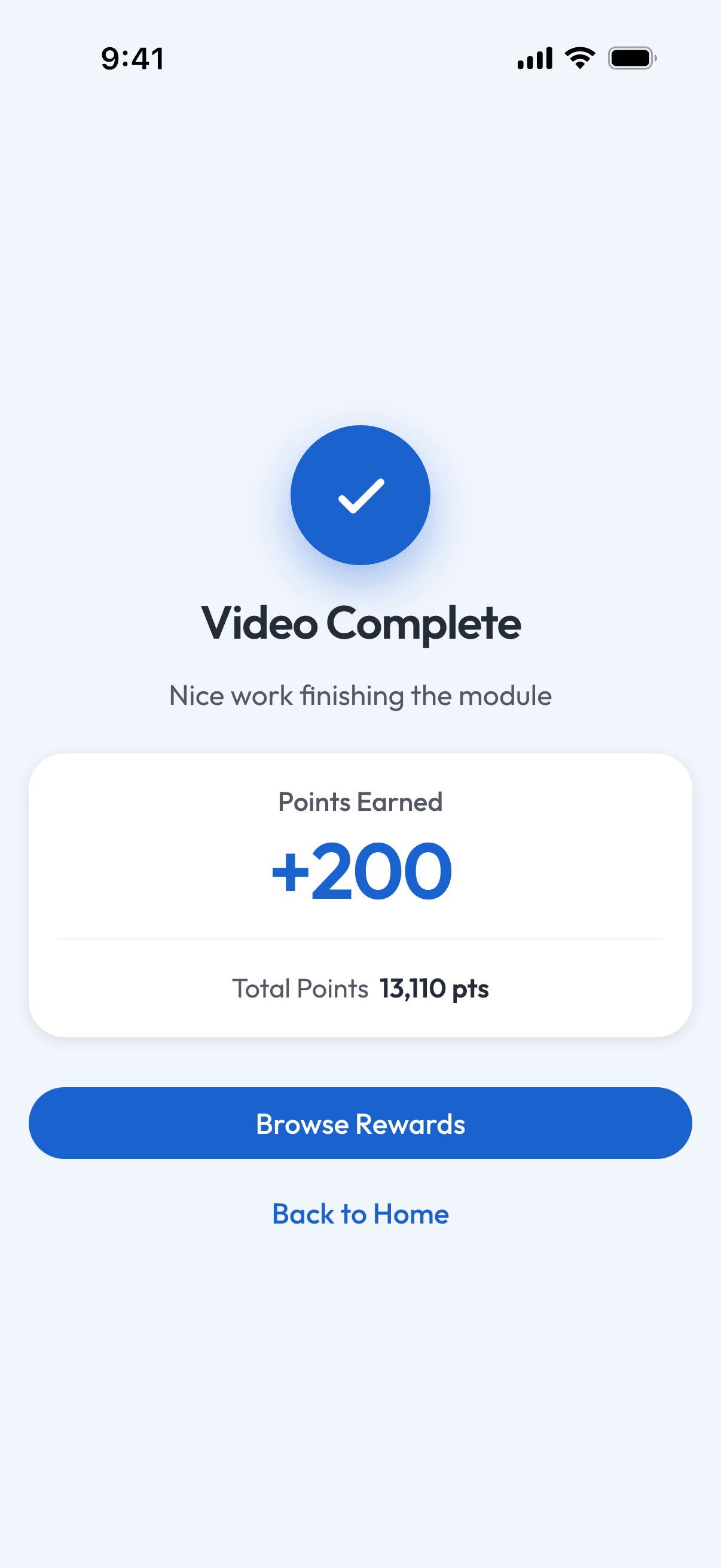
Points land with the new total
Share a Resource
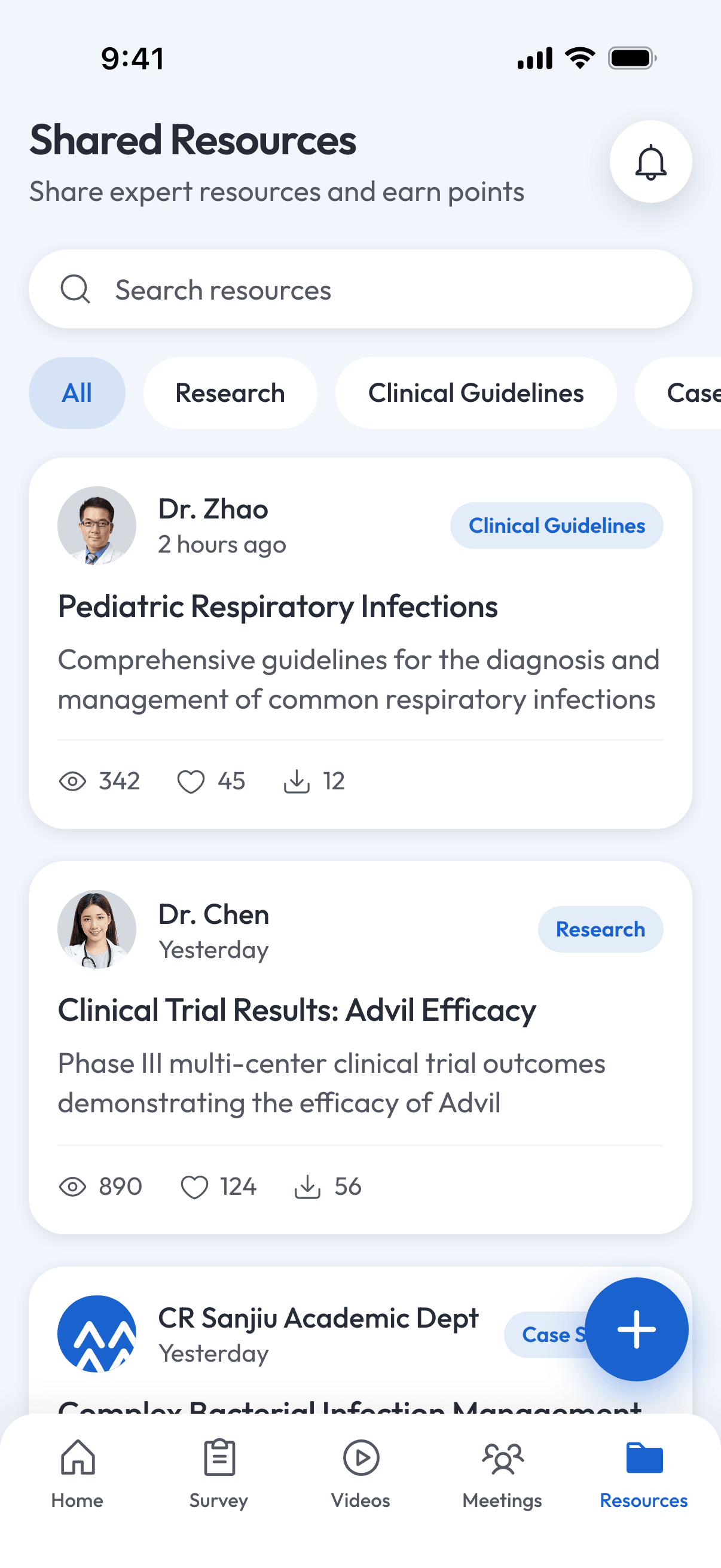
Resources shared by peers
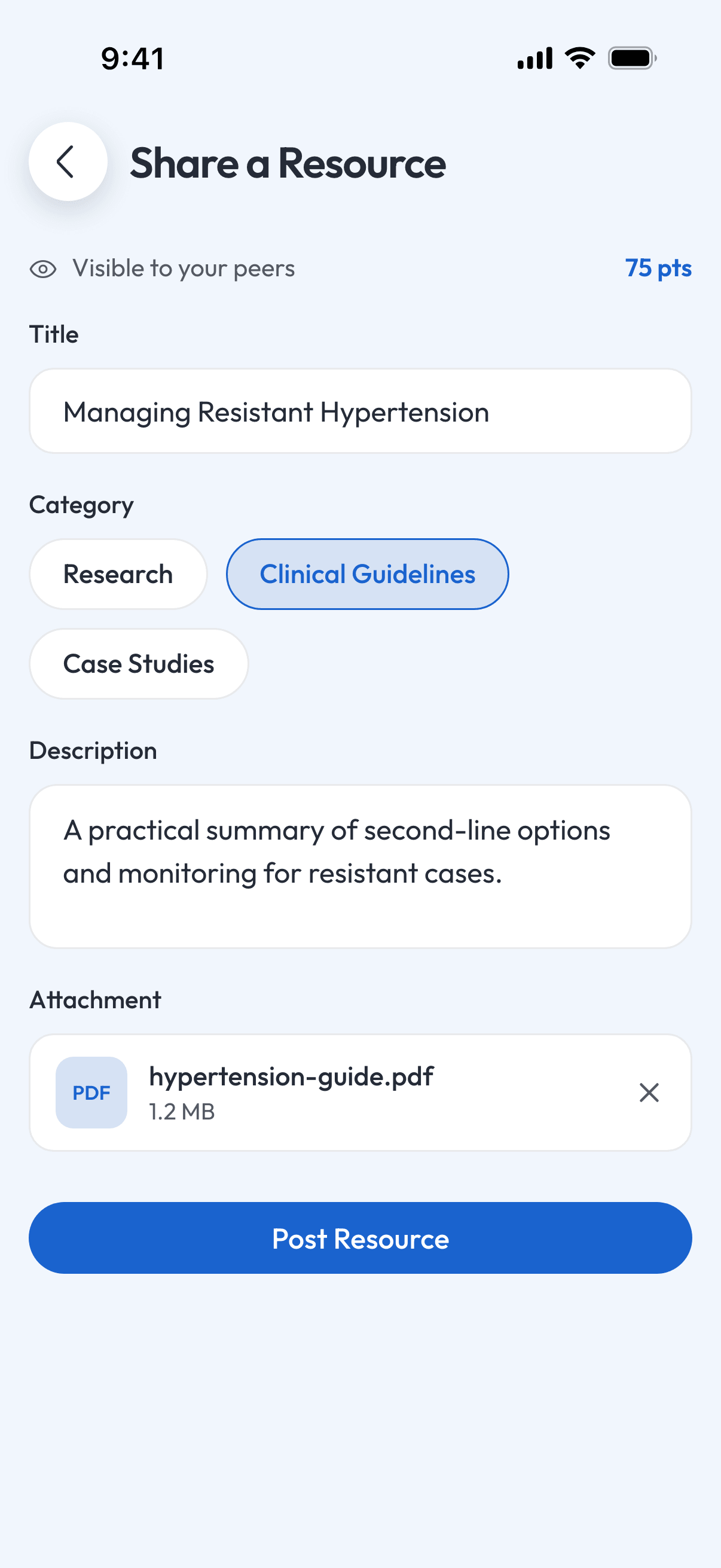
Points shown before you post
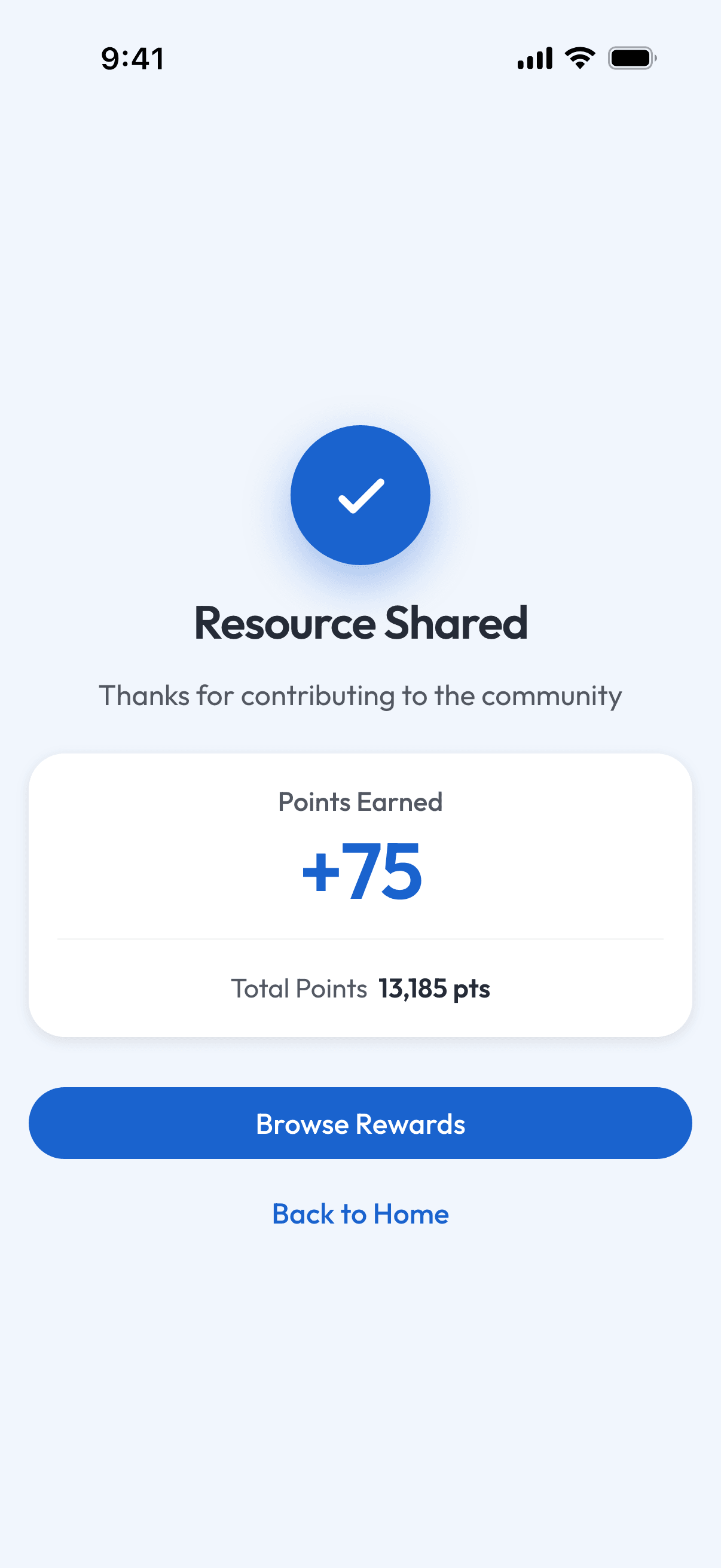
The same landing every flow gets
Attend an Academic Meeting & View Points History
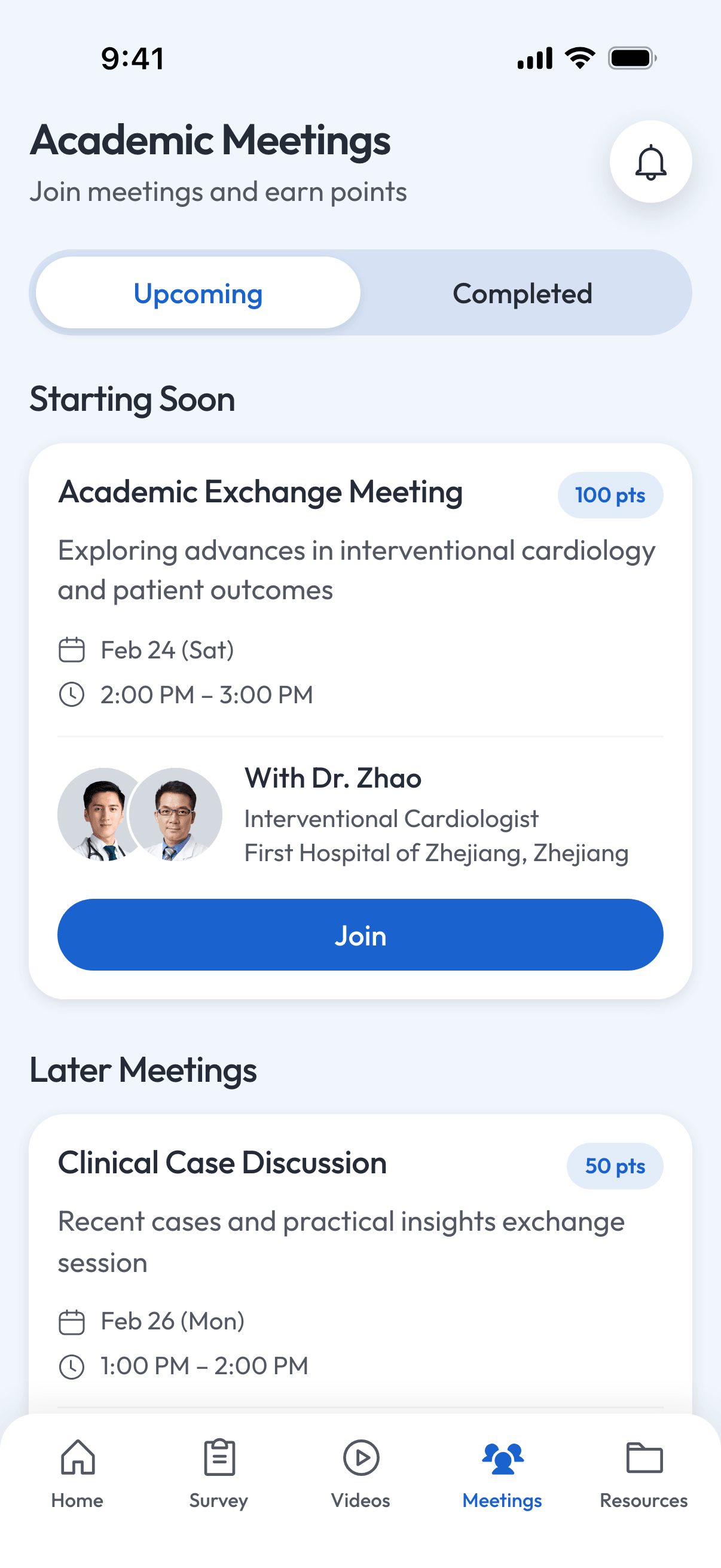
The schedule, points attached
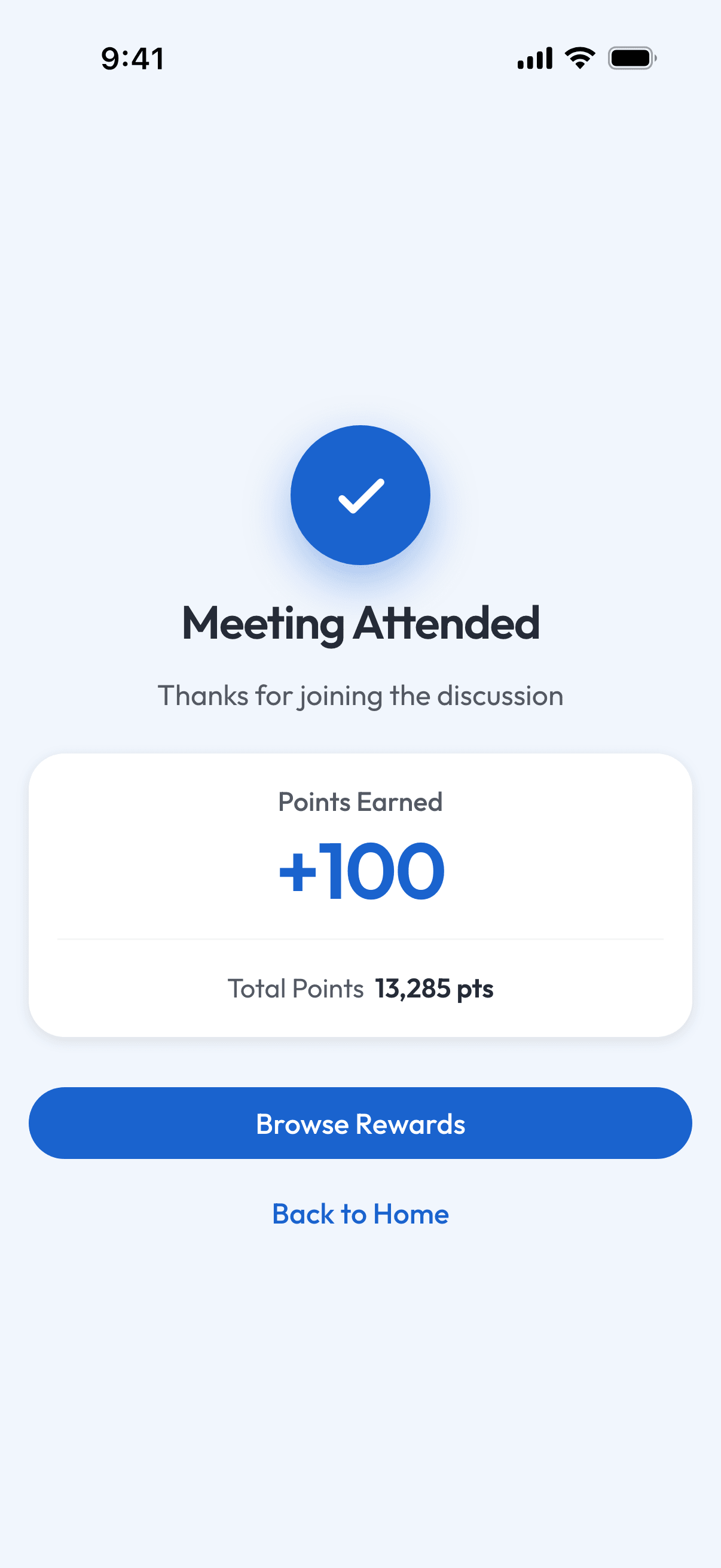
Showing up earns points too
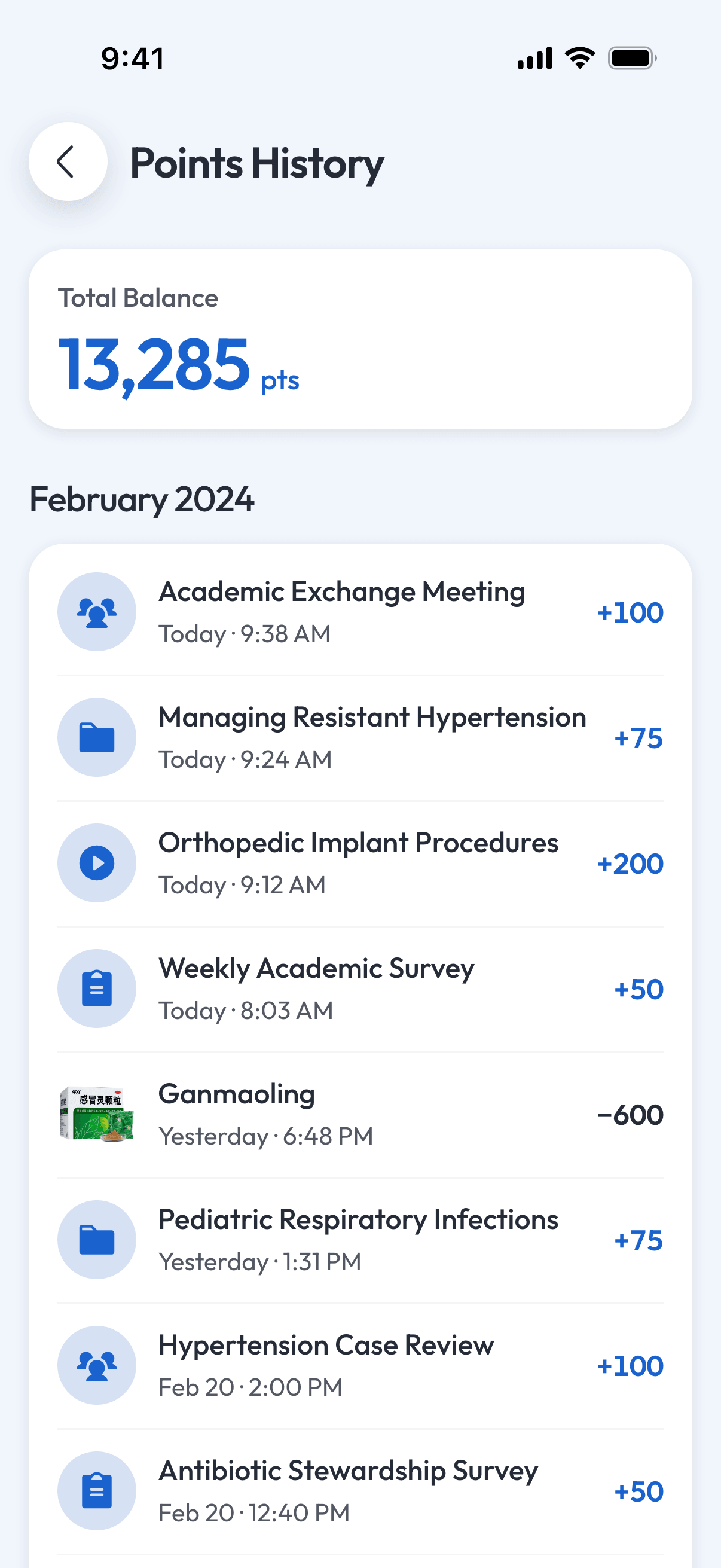
Every point, named and dated
Redeem
The Design System
Every screen, one language.
Color
Typography
Titles, 24/600
Body reads at 16/400.
Buttons sit at 16/500.
Meta at 14, muted.
Outfit everywhere. Emphasis is weight, never italics.
Controls
Redeem RewardsBack to Home12,860 ptsOne pill. Secondary is text. Numbers ride in tinted chips.
Icons
Phosphor fills, blue inside tinted circles.
Cards
Radius 20, one shadow token. Elevation is content, flat is control.
Outcome
The app launched as a hospital pilot, and it answered the only question that mattered: will doctors treat the points as real?
82%
earned points in week one
64%
redeemed within the first month
120
physicians across 6 hospitals
The app shipped as the doctor-facing side of CR Sanjiu's academic platform, replacing four scattered platforms with one point economy. Redemption, not sign-ups, was the number we watched: earning points is easy, but spending them means a doctor believes the points are worth something. After the pilot, the client expanded the program to two more provinces.
Reflections
The hardest problem was not the screens. It was making the points feel trustworthy.
Takeaways
What I Learned
I entered thinking rewards were about points. I left knowing they are about trust: behavior changed when the ledger became visible and redemption shipped like a store, not when we added points.
Compliance was the brief, not the constraint. Losing gifting cleared the way for a reward economy doctors run themselves, and that became the strongest part of the product.
What Comes Next
- Measure repeat redemption and the time from earning to spending
- Personalize the reward catalog by specialty and region
- Show sales reps which doctors actually use the earning opportunities they hand out, so the next allocation stops being guesswork